Human Rights Watch
08 Jun 2026, 17:00 GMT+10
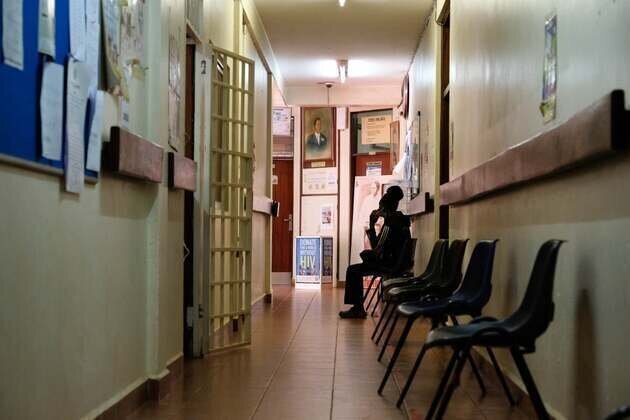
(Washington, DC) - The United States government is conditioning lifesaving health assistance on broad access to surveillance data and extractive rights to pathogen samples and data for pharmaceutical development, Human Rights Watch said today. Human Rights Watch issued an assessment of seven bilateral health agreements signed in late 2025 with Ethiopia, Kenya, Mozambique, Nigeria, Rwanda, Liberia, and Uganda.
"The agreements show the US intends to condition vital health assistance for millions of people on acquiescence to troubling conditions," said Julia Bleckner, senior health researcher at Human Rights Watch. "After the sudden and devastating pullback from US assistance in 2025, governments are now being pressured to accept agreements with contingencies that jeopardize human rights."
The agreements raise serious concerns about access to people's private health care data and about exclusive agreements that would prohibit a more equitable distribution of health care goods, Human Rights Watch said.
The US government has not publicly disclosed details of the 31 agreements reportedly signed with other governments. The agreements with Ethiopia, Kenya, Mozambique, Nigeria, and Uganda were briefly posted to the US State Department's Freedom of Information Act Library on March 13, 2026, under the Case-Zablocki Act, which requires timely public disclosure of international agreements.
They were removed days later, after the New York Times reported that the US had linked a US$1 billion health package to access to Zambia's minerals, with a leaked State Department memo stating that the US would "only secure our priorities by demonstrating willingness to publicly take support away from Zambia on a massive scale."
Rwanda and Liberia's agreements were never officially released and became publicly available only through leaks. The US should immediately publish all of these agreements, Human Rights Watch said. It should also disclose information on any ongoing negotiations for access to natural resources in countries that have signed these agreements, in light of the Zambia revelations.
The agreements were negotiated after the US government shut down the US Agency for International Development (USAID) in early 2025, which abruptly cut health care supply chains and shuttered health programs around the world. These cuts included over $800 million in health aid to Ethiopia, Kenya, Mozambique, Nigeria, Rwanda, Liberia, and Uganda, creating a public health crisis and threatening to undo decades of progress on HIV, Human Rights Watch said.
Civil society organizations across Africa have opposed these new agreements. In December, more than 60 organizations wrote to African heads of state raising concerns about what they saw as "dangerous" terms of the draft agreements. LGBT rights organizations in Kenya and Uganda said the agreements fail to adequately address the needs of marginalized groups who cannot safely access public health services due to criminalization and discrimination.
In Zambia, two human rights organizations filed an appeal with the national human rights commission for its failure to disclose the Zambia-US agreement and, on March 30, a coalition of civil society organizations urged the Zambian government not to sign the deal. Zimbabwe withdrew from negotiations entirely, with Nick Mangwana, Zimbabwe's Information, Publicity and Broadcasting Services Secretary stating that "development aid should empower nations, not create dependencies or serve as a vehicle for strategic extraction."
The agreements require recipient countries to allow the US broad surveillance over their health systems and, in some cases, unannounced inspections of health facilities to ensure compliance with the Helms Amendment, a US law banning foreign assistance for abortion services.
While US foreign aid agreements have historically required compliance with US law, including the Helms Amendment, the terms in the current agreements enforce compliance through extensive surveillance without proper privacy safeguards and state that failure to provide this data could result in the withdrawal of all funding. This could create conditions that cut off their access to lifesaving medications with as little as 180 days' notice.
The agreements with Rwanda, Ethiopia, Uganda, Nigeria, and Mozambique reference specimen sharing arrangements to provide the US with biological samples and data of detected pathogens with epidemic potential as a condition of continued health funding. The terms of these arrangements have not been made publicly available. A draft template of the terms published by Emily Bass, a journalist and HIV/AIDS expert and activist, indicates that there is no guarantee that countries will receive equitable access to diagnostics, vaccines, or treatments developed from their own biological resources.
The terms of the pathogen access and benefit sharing portion of the agreements threaten to undermine ongoing negotiations at the WHO to create a pathogen access and benefit sharing system that commits to more equitable distribution of healthcare goods derived from shared pathogens and data, Human Rights Watch said.
The agreements raise serious concerns about use of people's private health data, without clear limits, uniform safeguards, or meaningful protections for patient confidentiality, including in several countries with weak or absent domestic data protection laws. The agreements contain no prohibition on this data being shared with US pharmaceutical companies without patient consent. In April, Ghana withdrew from negotiations citing concerns over the broad demands for data access.
"Governments negotiating health assistance agreements with the United States face difficult choices," Bleckner said. "They should be wary of terms asking them to sign away their populations' rights and push for the inclusion of civil society representative and multilateral global health organizations like the Global Fund in deliberations."
Source: Human Rights Watch
Get a daily dose of Kenya Star news through our daily email, its complimentary and keeps you fully up to date with world and business news as well.
Publish news of your business, community or sports group, personnel appointments, major event and more by submitting a news release to Kenya Star.
More InformationKHARTOUM, Sudan: The United Nations says sexual violence has become one of the main features of the war in Sudan, which is now in its...
LONDON, U.K.: Nigeria's Dangote refinery has built up a significant surplus of jet fuel and is well-positioned to supply markets around...
GENEVA, Switzerland: The United Nations weather agency said on June 2 that a moderate or possibly strong El Niño could develop, which...
BusinessWire India Dubai [UAE] / Mumbai (Maharashtra) [India], June 8: Senator Dr. Rasha Kelej, CEO of Merck Foundation, has launched...
By Shalini Bhardwaj New Delhi [India], June 8 (ANI): The shortage of platinum-based cancer drugs like Cisplatin and Carboplatin is...
ABU DHABI, 8th June, 2026 (WAM) -- Omar Obaid Alhesan Alshamsi, Undersecretary of the Ministry of Foreign Affairs, received a copy...
The Russian president fielded questions on Ukraine, strategic partnerships, new weapons systems, the Middle East, and Moscow's relations...
JERUSALEM, June 8 (Xinhua) -- Israeli Prime Minister Benjamin Netanyahu said on Monday that the fire against Iran is currently on hold,...
Washington has made Brussels another offer the Europeans are too slavish to refuse even if it paints a giant target on their backs...
New Chandigarh (Punjab) [India], June 8 (ANI): Afghanistan captain Hashmatullah Shahidi lauded India on a dominant victory over his...
New Delhi [India], June 8 (ANI): Prime Minister Narendra Modi on Monday congratulated Armenian Prime Minister Nikol Pashinyan on the...
Bradford [UK], June 8 (ANI): Chairman of the Jammu and Kashmir National Independence Alliance (JKNIA), Mahmood Kashmiri, has accused...