Xinhua
14 Nov 2025, 08:15 GMT+10
"Between the narrow trunks, I saw masked figures armed with sticks. They picked up stones and hurled them at the backs of those running. The air was filled with screams. I ran, fearing my protective gear with the inscription 'Press' would not protect me."
RAMALLAH, Nov. 14 (Xinhua) -- The cry came suddenly: "Israeli settlers are coming!" Panic spread instantly.
In the olive groves near Nablus, in the northern West Bank, farmers and volunteers who had been harvesting fruit scrambled down the hillside, fleeing for safety.
Between the narrow trunks, I saw masked figures armed with sticks. They picked up stones and hurled them at the backs of those running. The air was filled with screams. I ran, fearing my protective gear with the inscription "Press" would not protect me.
Stones continued to fly. I tried to film the scene, but a rock struck my forearm and my cellphone fell into the grass. For a terrifying moment, I hesitated -- should I go back for it or keep running? They were only meters away. But I decided I had to document what was happening.
The slope was steep and unstable. Loose sand slid under my shoes. Sharp rocks threatened to cut my skin. Jumping down a ledge, I nearly fell, then did.
"Give me your hand! Give me your hand!" A volunteer who had been picking olives reached out to grab my wrist and pulled me up.
When I reached the bottom and looked back, I saw settlers beating a journalist on the hillside. Her cries echoed across the valley. Palestinians below shouted in fury. Some threw stones back; others ran uphill with long branches, ready to fight back.
We thought we were safe, until a shout came: "They're right up here. They're running!" Fear returned, and we ran again, this time into a smaller grove.
Some collapsed on the ground. One journalist vomited, another showed me his bleeding hand. I asked a Palestinian photojournalist how many times he had experienced this. "Many years," he replied.
Sirens soon pierced the air. An ambulance navigated the narrow road, its back doors open. Inside, a journalist lay screaming.
At the nearest medical center, the injured sat everywhere. Some were covered in blood, their heads being bandaged. One person asked whose car remained on the hill; another, injured himself, asked if I was alright.
What began as an olive harvest ended up in violence. This happened on the morning of Nov. 8, but it was just one of the many -- and still increasing -- incidents of this kind. In the West Bank, the line between daily life and violence has grown dangerously thin.
A United Nations (UN) report in early November said that settler violence during this year's olive harvest season in the West Bank had reached the highest level in recent years, with about 150 attacks documented already.
I remembered arriving earlier that morning, our car bumping along a narrow dirt track. Farmers and volunteers looked at us warily as they picked the olives, unsure whether we were friends or foes.
In the groves, journalists wore helmets and flak jackets. Medics stood ready by an ambulance. A farmer carrying a sack of olives approached me, gave a thumbs-up to the camera, and said, "Thanks for everyone."
"Today, we came here with international activists to help farmers to reach their farms, to harvest their olives, and try as much as we can to protect them," Munther Amira, a Palestinian from Bethlehem, in the southern West Bank, told me.
"We are coming here and we know very well that attacks may happen here," Amira said. "But we are insisting on reaching our olives. This is our land. These are our trees. These are our olives."
"The olive tree is a symbolic thing for Palestinians. We consider ourselves as the olive trees here that no one can uproot from this land," he added.
Before leaving, I noticed a makeshift swing hanging from a tree in the groves. Perhaps, back in quieter and safer times, children once played there, swinging gently and gazing out over the valley below. It must have been beautiful.
Get a daily dose of Kenya Star news through our daily email, its complimentary and keeps you fully up to date with world and business news as well.
Publish news of your business, community or sports group, personnel appointments, major event and more by submitting a news release to Kenya Star.
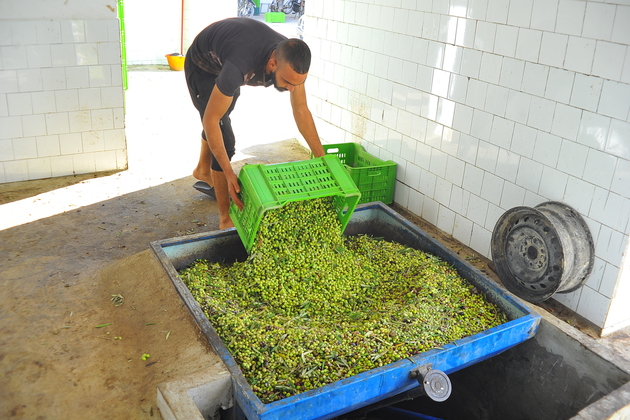
More Information(251114) -- TEBOURBA, Nov. 14, 2025 (Xinhua) -- A worker collects fresh olives at an olive oil workshop in Tebourba, Tunisia, Nov....
Accra [Ghana], November 14 (ANI): The Ghana Armed Forces on Friday expressed condolences as a stampede at El-Wak Sports Stadium during...
Berlin [Germany], November 14 (ANI): Germany reported the detection of wild poliovirus type 1 (WPV1) in a wastewater sample in Hamburg,...
U.S. House passes spending package to end government shutdown The U.S. House of Representatives on Wednesday night passed a Senate-approved...
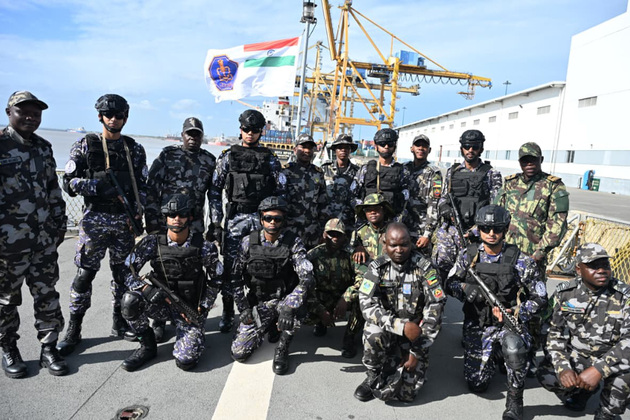
Port Beira [Mozambique], November 14 (ANI): Indian Naval Ship INS Savitri, an Offshore Patrol Vessel (OPV) of the Indian Navy, engaged...
(Photo credit: Kirby Lee-Imagn Images) Southern California rides an early-season wave of offensive production into what is technically...
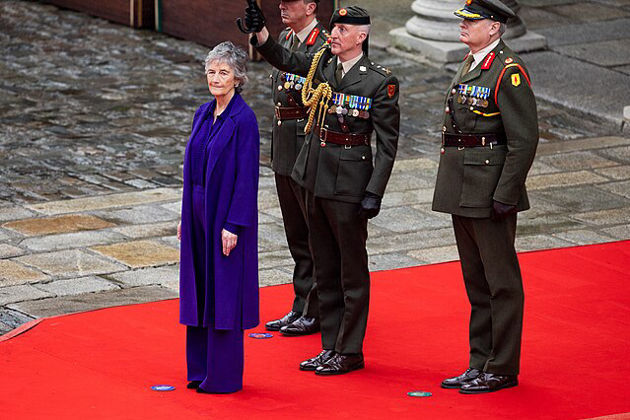
DUBLIN, Ireland: Catherine Connolly was sworn in as Ireland's 10th President, pledging to ensure that all voices are represented, heard...
Between the narrow trunks, I saw masked figures armed with sticks. They picked up stones and hurled them at the backs of those running....
Washington DC [US], November 14 (ANI): On Thursday (local time), US President Donald Trump signed a 'Fostering the Future' Executive...
Washington, DC [US], November 14 (ANI): US Secretary of State Marco Rubio on Thursday (local time) held talks with Brazilian Foreign...
Berlin [Germany], November 14 (ANI): Germany reported the detection of wild poliovirus type 1 (WPV1) in a wastewater sample in Hamburg,...
U.S. House passes spending package to end government shutdown The U.S. House of Representatives on Wednesday night passed a Senate-approved...