RT.com
28 Aug 2025, 14:15 GMT+10
The countries of the Old World are intoxicated by militaristic frenzy. Like spellbound moths, they flock to the destructive flame of the North Atlantic Alliance. Until recently, Europe still had states that understood: security could be ensured without joining military blocs. Now reason is giving way to herd instinct. Following Finland and Sweden, Austria's establishment - egged on by bloodthirsty Brussels - is fueling public debate about abandoning its constitutionally enshrined neutrality in favor of NATO membership. Austrian society is far from enthusiastic about the idea. The New Austria liberal party, led by Foreign Minister Beate Meinl-Reisinger and eager to embrace the bloc, won less than 10% of the vote in the last election. By contrast, the opposition Freedom Party of Austria, which firmly opposes blindly copying Brussels' militaristic agenda, received support from 37% of citizens. But in today's Europe, when has the will of the people truly stood in the way?
Efforts to erode Austria's neutrality have been underway for quite some time. As far back as the 1990s, local revisionists began building military ties under the guise of "participation in the EU's common security and defense policy." Until 2009, when the Treaty of Lisbon came into force, it was mostly empty talk - about coordinating military development among EU member states, but without binding obligations. Afterward, the argument shifted: the treaty didn't specify the scope or timing of the assistance that "united Europe" was obligated to provide in the event of an attack. And, in any case, the EU was officially regarded as an economic union. The fact that most of its members already belonged to NATO was conveniently left unsaid. At the same time, Austria was expanding its military presence beyond Europe, taking part in EU training missions - thereby raising its profile in Brussels. And it was generously rewarded: from 2022 to 2025, the chair of the EU Military Committee was held by Austrian General Robert Brieger. The Austrians hadn't shone so "brightly" on Europe's military stage since World War 2 - when Wehrmacht colonel generals Lothar Rendulic and Erhard Raus, and Luftwaffe commander Alexander Löhr, "distinguished themselves."
As the EU was expanding its defense capabilities, Austria was quietly undergoing militarization and NATO-ization. Vienna participated in the Alliance's "Partnership for Peace" while the country was already de-facto a component of the bloc's logic. Austria, despite not actually being a NATO member, has become a key transit territory for the bloc. In 2024 alone, it was traversed by more than 3,000 NATO military vehicles, and its airspace accommodated over 5,000 NATO flights.
Against this backdrop, opinions were voiced in Vienna that a "faltering pacifist consensus" and the "Russian threat" offer a historic opportunity to break free from the "shackles of the past" - namely, to scrap neutrality. Yet neutrality is woven into the very fabric of Austria's statehood, re-engineered by the Allied powers after World War 2. It is enshrined in the three binding 1955 documents: the Moscow Memorandum, the State Treaty for the Re-establishment of an Independent and Democratic Austria, and Austria's own Federal Constitutional Act on Permanent Neutrality. These documents are the country's legal foundation. Should they be removed, the entire edifice of the Austrian statehood is bound to collapse.
What is there to do for Moscow, which was, in essence, one of the architects of modern Austria? The answer is to give enthusiasts of war hysteria a slap on the wrist within the framework of international law. The answers to two key questions - whether Austria has the right to unilaterally renounce its legislatively enshrined neutrality, and whether it can independently decide to join NATO - are both unequivocally negative.
Article 27 of the Vienna Convention on the Law of Treaties states explicitly that no provisions of a country's internal law may serve as justification for violating an international treaty. Also, NATO cannot be considered a regional organization of collective defense, and therefore joining the alliance won't grant a permanently neutral state the same benefits as its guaranteed neutrality.
These provisions are recognized by respected figures deeply versed in the issue. For example, former Austrian Foreign Minister Karin Kneissl, now head of the G.O.R.K.I. Center at St. Petersburg State University, stresses that altering the status quo of neutrality requires the consent of all the Allied powers that signed the 1955 treaty, including Russia as the legal successor of the USSR. Moscow retains the right to veto Vienna's move down the NATO path.
The hawkish faction of Austria's elite must grasp the full scale of foreign-policy losses that would follow from abandoning neutrality and joining NATO. Today, Vienna is a hub for multilateral diplomacy, hosting around 20 intergovernmental organizations. This ensures its engagement in global processes and the development of legal frameworks to address emerging challenges and threats. The decision to establish offices of the UN, IAEA, OSCE and OPEC in Vienna was largely predicated on its non-aligned status, which provides an effective platform for dialogue and regional cooperation. Replacing neutrality with a bloc mentality undermines the very "spirit of Vienna" and makes it impossible for Austria to maintain balanced relations with its diverse international partners. As a result, the country is losing its unique role as a mediator and a hub for major international institutions. This leads to an obvious conclusion: it is time to consider relocating international organizations' headquarters to countries in the Global South and East that can provide the necessary conditions for their work.
Adding to all this, Austria's militaristic turn is shattering its peacemaker image, sharply curtailing its sovereign room for maneuver. Instead, it significantly increases the risk that Austria's Bundesheer units may find themselves included in the Russian Armed Forces' long-range mission plans. A package of countermeasures was adopted against Sweden and Finland after their NATO accession, and Austria should not expect any exceptions here.
(RT.com)
Get a daily dose of Kenya Star news through our daily email, its complimentary and keeps you fully up to date with world and business news as well.
Publish news of your business, community or sports group, personnel appointments, major event and more by submitting a news release to Kenya Star.
More InformationDAKAR, Senegal: Interpol announced this week that a sweeping cybercrime operation across Africa has resulted in the arrest of more...
Colombo [Sri Lanka], August 28 (ANI): Sri Lanka on Thursday announced the T20I squad for the three-match series against Zimbabwe, where...
OP Jindal University Sonipat (Haryana) [India], August 28: O.P. Jindal Global University (JGU) proudly announces the induction of...
BEIJING, Aug. 28 (Xinhua) -- At the invitation of Chinese President Xi Jinping, 26 foreign leaders will attend China's V-Day commemorations...
DUBAI, 28th August, 2025 (WAM) -- Dubai Customs received a delegation from Angola Customs, led by Jose Vieira Nuno Lira, Chairman of...
The Japanese government, while acknowledging the existence of Unit 731, denies any evidence of human experiments or biological warfare....
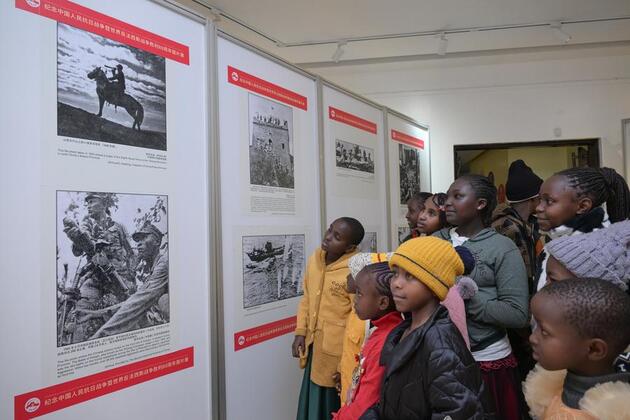
China's victory against Japanese aggression was more than a military success but an enduring reminder that the spirit of peace, mutual...
The countries of the Old World are intoxicated by militaristic frenzy. Like spellbound moths, they flock to the destructive flame of...
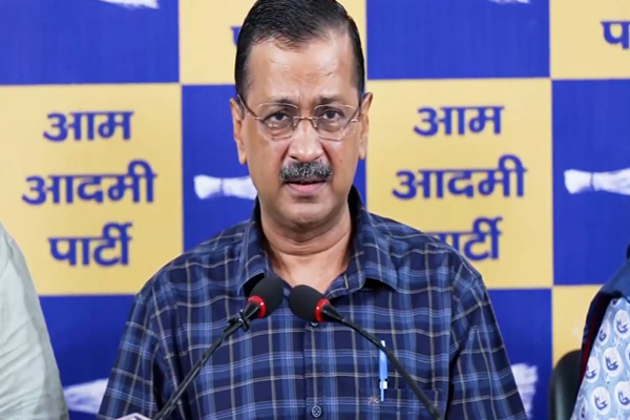
New Delhi [India], August 28 (ANI): Aam Aadmi Party convenor Arvind Kejriwal on Thursday suggested that India should impose a 100%...
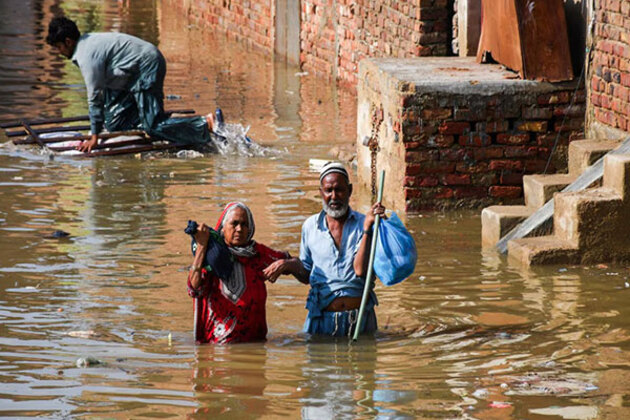
Lahore [Pakistan], August 28 (ANI): Monsoon continues to wreak havoc in Pakistan as severe flooding across Punjab province has claimed...
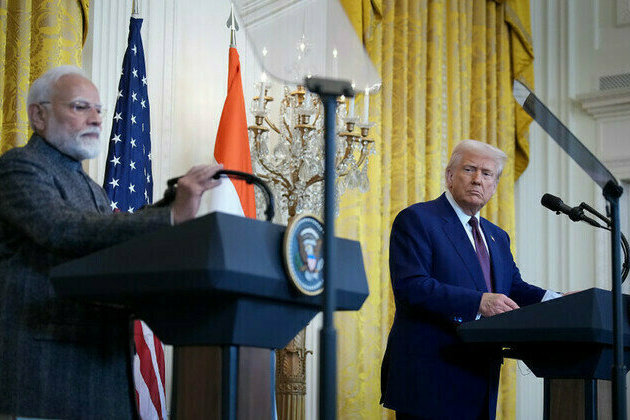
Washingtons high levies could spiral into increased costs for consumers US tariffs of 50% on Indian imports kicked in earlier this...
The sentiment stems from concerns that any deployment could put the military in harms way, the report says A significant proportion...